

When Anxiety, Stress, or Self-Doubt Start Running Your Life
THERAPY FOR YOUNG PEOPLE (10–25)
You're just trying to live your life.
But something keeps getting in the way.
School Stress
Test Anxiety
Social Anxiety
Low Confidence
Career Pressure
THE HARDER YOU TRY TO MOVE FORWARD, THE MORE OVERWHELMED YOU FEEL.
Family Conflict
Anxiety about the future
Anxiety
I want to deal with my anxiety...
So I can enjoy going out with friends and doing the things I love.

LOOKING PAST THE PROBLEM
WHERE DO YOU WANT TO GO
Therapy often spends a lot of time asking:
Where are you stuck?
Sure, that's important.
But we think there's another question that matters just as much:
Where do you want to go?
We call this the “So I Can” lens.
Instead of only focusing on the anxiety, depression, or self-doubt, we also focus on what comes after it.
Depression
I want to deal with my depression...
So I can stop watching life pass me by and start building one I'm proud of.
Self-Doubt
I want to deal with my self-doubt...
So I can stop second-guessing myself and start becoming the person I need to be.
BECAUSE THE GOAL WAS NEVER TO JUST FEEL LESS BAD
IT WAS TO GET BACK TO LIVING.

HOW WE WORK WITH YOUNG PEOPLE
YOU WERE BUILT
FOR MORE
You weren't built to just survive — to grind through another day and call it a life.
You were built for something more than that. Much more.
I believe every person is born with an inner measuring stick, a sense, deep down, of who you're supposed to be.
And until you're living in a way that matches it, something can feel slightly off.
Not necessarily sadness.
More like feeling out of position, even when everything looks fine from the outside.


Honesty,
Kindness,
Courage,
Hard Work,
Loyalty,
Responsibility,
Compassion
YOUR MEASURING STICK IS YOUR VALUES
The good news?
That measuring stick isn't some mysterious standard
you're supposed to magically discover.
It's your values.
Whatever genuinely matters to you. Once you know what you value, you have something real to measure yourself against.
That's The Living Project.
Not chasing happiness, comfort, or safety at all costs.
Not trying to eliminate every roadblock.
It's learning to listen to the right voice inside you,
the one that sees your worth, knows who you need to be,
and points you toward the life beyond the roadblocks


Being Value
Picture a lump of clay sitting on a table.
It hasn't been shaped yet, but it's already full of potential. It could become almost anything.
That's being value: your worth simply because you exist.
You didn't earn it.
You were born with it.

UNDERSTANDING YOUR WORTH
3 KINDS OF WORTH
Worth isn't just one thing.
It's three things — and they need each other.

Doing Value
But clay isn't meant to sit untouched forever.
Something in it wants to become. To be shaped into something real.
That's doing value: your potential becoming action.
It's what you actually do with what you've been given.

Moral Value
That same clay could become a beautiful horse statue. Or it could become a weapon. Same clay. Same effort. Same doing value.
Completely different outcome.
Moral value is about shaping your potential in a way that matches what you genuinely believe is right.
Your personal values are what give that direction.

You Need All Three
Take any one away and something falls apart.
Potential without action stays a lump of clay.
Action without direction can build weapons just as easily as statues.
Good intentions without action never become anything real.
And this matters especially if you're dealing with depression.
Depression doesn't take your potential away. It can block the path to it.
The pressure to create, act, connect, and matter can still be in there.
Part of our work together is reopening that path.

WHAT'S BEHIND THE WORK
THE TOOLS BEHIND THE WORK
I didn't just dream this up lying on a beach one day.
My work draws from established therapeutic approaches I've used and refined over 25 years and more than 12,000 sessions,
always trying to answer the same question:
What actually helps?
Understanding Thoughts + Emotions
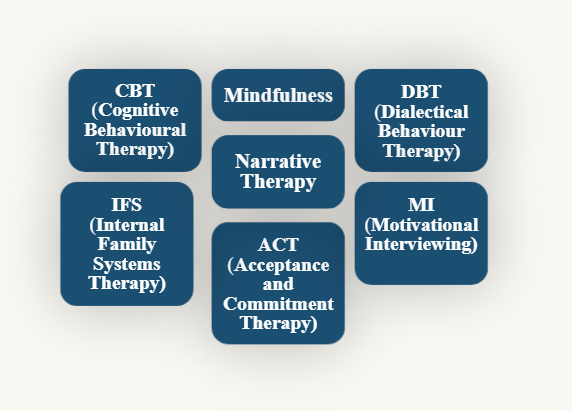
CBT, Mindfulness and DBT can help you understand what's happening in your thoughts and emotions and give you practical tools for responding to them.
Creating Distance + Change
ACT and Motivational Interviewing can help create distance from troublesome thoughts and strengthen your motivation to move in a different direction.
Understanding
Your Story
IFS and Narrative Therapy can help you understand the stories and different parts of yourself that have been influencing your life — and help you relate to them differently.

POWERFUL TOOLS. BUT SOMETHING WAS MISSING.
I've used these approaches for years, and they offer powerful tools.
But over time, I kept noticing gaps.

Some approaches tell you to argue with negative thoughts.
But engaging with the Villain — a world-class arguer — can be exactly what it wants.
It's like picking up a tug-of-war rope with Dwayne “The Rock” Johnson on the other end.
You're probably not going to out-muscle him.
Sometimes the way to win is to drop the rope — or never pick it up
Some approaches teach you to separate yourself from your thoughts.
Good.
But not every thought should be ignored.
Some thoughts — the ones coming from your Trustworthy Voice — are worth listening to.
Some approaches focus on becoming the author of your own story.
Being in control of your life sounds great.
But control alone misses something important:
What kind of life should you actually build?
That's where that internal measuring stick — your values and moral direction — matters.
Some approaches give you practical tools without a deeper reason to use them.
Others introduce so many concepts that therapy itself can start to feel confusing.
That's where Two Voice Therapy comes in.
Not to replace these approaches.
To help connect the pieces.

TWO VOICE THERAPY
TWO VOICES. ONE YOU CAN TRUST.
Here's what I've come to realize over the years:
There are two sources inside you — two inner voices.
One you should learn not to trust.
And one you should learn to trust.
The Untrustworthy Voice
The Untrustworthy Voice is like the villain in a movie.
It knows where you're vulnerable:
Anxiety
Depression
Anger
Low self-esteem
Fear
Self-doubt
And it uses those vulnerabilities against you.
It's loud.
It's convincing.
And it isn't interested in helping you build a good life.
The Trustworthy Voice
The Trustworthy Voice is different.
It speaks truth.
It has your best interests in mind.
It recognizes your worth.
It knows your values.
And it points you toward the person you need to be.
Sometimes it's frustratingly quiet.
But it's still there.

THE POISON WELL +
THE PURE WELL
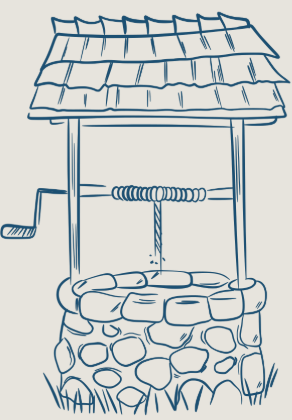
Think of the Untrustworthy Voice like a poisoned well.
Once you know the water is poisoned, you don't have to test every cup that comes out of it.
You identify the source.
And you stop drinking from it.
Especially when there's a pure well sitting right beside it.
Untrustworthy Voice → Recognize it. Disengage from it.
Trustworthy Voice → Hear it.
Test it against your values. Follow it.
Two Voice Therapy helps you learn to tell the difference. Because once you can hear which voice is speaking, you don't have to treat every thought like the truth.

SIMPLE DOESN'T MEAN EASY
Learning to recognize the Villain can be challenging.
It has probably had years of practice getting your attention.
But as we work together, you become better at recognizing its strategies.
You learn how to:
Spot the Villain
Recognize its patterns
Stop automatically engaging with it
Turn toward your Trustworthy Voice
Act according to your values instead

Being Value
Your Trustworthy Voice reminds you of your potential and inherent worth.

PUTTING IT ALL TOGETHER
YOUR VOICE, YOUR WORTH, YOUR LIFE
Remember the three kinds of worth?
Two Voice Therapy helps connect them.
Doing Value
It challenges you to turn that potential into action and make an impact on the world around you.

Moral Value
And it helps you make sure that impact reflects the values you actually want your life to stand for.
The Untrustworthy Voice — the Villain — tries to interfere with that process.
But the better you become at recognizing it, the less power you have to give it.
YOU’LL FEEL YOURSELF GETTING CLOSER TO THE PERSON YOU NEED TO BE.
It will feel important.
It will feel right.
It's what you were built for.

BACK TO THE ROAD
BACK TO BUILDING A LIFE
Therapy at The Living Project is about much more than clearing the roadblocks the Untrustworthy Voice puts in your way.
We absolutely deal with the Villain. We deal with the anxiety. The depression. The fear. The self-doubt.
But that's not where the work ends...
Frequently Asked Questions: Young People
-
This is very common.
10, 16, 25 years old… there's actually a pretty good chance your kid won't want to come to therapy.
Here's some reasons for the "anti-therapy" protest – at least at the start:
They might think it's part of your devious master plan to mold them to your will (it doesn't hurt to ask yourself if this is true).
They might be mad at you and know if they refuse it'll drive you crazy.
They may think the therapist will side with you and they don't want to be ganged up on.
They may have tried therapy before and had a bad experience.
They may feel anxious about doing therapy on their own – if you're trying to get them to do individual therapy.
They may feel mistrustful and closed off if you insist on joining them but they want to talk on their own.
They may simply think they don't need it.
A kid who doesn't want to be in therapy doesn't benefit from therapy. You can take that to the bank.
As their parent, if your idea is getting them to therapy so the therapist will turn them into the kid you've always wanted… I would suggest a new strategy. I've yet to see this one work. Not for my kids, or anyone else's.
Here are some things that often help kids change their mind about therapy:
Find out why they don't want to go. If you're the reason, do what you can to accommodate them.
Join them if they're afraid to start on their own.
Let them go alone if they don't want you there.
Assure them that this is truly for them – not you – and you won't drill them with questions after the sessions.
Make them a deal. If they agree to go to 2 or 3 sessions, then they can make their own decision whether or not to continue. You won't put any pressure on them.
Try to involve your kid in the free 20-minute phone introduction we offer at The Living Project.
Ultimately, the best strategy is to just focus on getting your kid there and let your therapist use their skills to connect and make your kid comfortable. I see this work all the time. If your kid bites, then it's your job to be patient and not lose them by trying to pull them into the boat too quickly.
-
I'm not going to tell you there’s a clear answer for this one.
What I'd look for: Has this been going on for more than a few weeks? Is it affecting their sleep, their eating, their friendships, their school performance? Are they pulling away from things they used to love? Are they describing their life as hopeless or worthless?
If most of those are “yes”, it's probably more than a phase.
That said, don’t feel you have to wait until it's a crisis. If something feels off, trust your instincts. Book a free consultation with us, and I promise you we’ll give you an honest answer about whether therapy is the right move.
-
I see lots of young folks struggle with this.
Test anxiety isn't just pre-exam nerves. For a lot of young folks it's a cycle — fear of failing creates anxiety, anxiety tanks performance, poor performance feeds more fear. Around and around it goes.
Therapy helps break that cycle. We work on identifying the thoughts that can't be trusted, the ones that want you to fail. And more importantly, the thoughts that can be trusted — the ones that know what you're actually capable of. You'll learn how to make the untrustworthy thoughts not matter, so they stop affecting your performance. And you can get on with landing the marks you deserve.
-
There's actually a lot you can do about social anxiety.
Here's the tricky thing though. Most young folks with social anxiety already know their fears are exaggerated. The difficulty is stopping yourself from believing the anxious thoughts coming from the source you can't trust. This untrustworthy voice is a marketing genius. It first tells you what you should worry about and then offers to keep you safe from it.
It says "You're going to say something stupid and look like an idiot at that party tonight. Trust me, you don't need the embarrassment. Just stay home." A hard message to resist. But we'll show you how to recognize these as lies, and how to not engage with them. As well as how to find, boost, and believe your trustworthy voice.
This approach gets you out of your room and back into a life of fun, friends and fulfillment.
-
Yes. So much so it’s a meme for younger generations.
Young folks today are bombarded from all sides with messages of doom and pessimism.
“You won’t find a job.”
“Climate change will wipe us all out.”
“You’ll never make enough money to buy your own house and support a family.”
“Another pandemic is just around the corner.”
But at the same time, go out there and live your dreams.
Nothing feels certain like it was for their parents and grandparents. The gap between the life they want and the life they're afraid they'll get feels enormous.
Future anxiety becomes a real problem when it starts to paralyze. When young folks stop making decisions, stop taking risks, stop hoping and believing in a brighter tomorrow — that's when future fear takes over, and that’s when we should talk.
What we do is help them focus less on staying safe and comfortable… and more on what they can actually do to be the person they need to be. The old goal is comfort, the new goal is purpose and meaning. That’s the shift that transforms.
-
Relationship anxiety is real — and I see it all the time in my therapy office. It shows up in a few different ways. Young folks seem to be more nervous about getting into relationships now. They say:
I'm worried I'll get distracted and my marks at school will suffer.
I'm worried it will add too much to my already stressful life and I'll get overwhelmed.
I haven't been in a relationship before and I'm worried I'll make a fool of myself by doing or saying the wrong thing.
I'm worried the person I like will realize what a "disappointment" I am and break up with me. That would be devastating. I'm just going to save myself the heartache and stay friends instead.
I'm looking for a life partner and I'm worried I'll make the wrong choice. Maybe it's better for me to stay out of a relationship than to choose the wrong person and ruin my life.
Young folks who are in relationships also feel anxiety. They tell me:
I'm worried my partner will cheat on me.
I'm worried my partner will find my flaws and not like me anymore.
I'm worried if my partner doesn't respond to my texts fast enough it means I've done something wrong.
I'm worried about the sex stuff:
Will my partner expect more than I feel comfortable with?
I feel pressure to know what to do, and at the same time to not act overly experienced. It's a no-win situation.
Somewhere along the way, relationships start to feel dangerous, threatening, risky, and uncomfortable.
We won't try to make relationships risk-free. That would be impossible. Instead we show that risk and relationships are a package deal. You can't get the amazingness without the possibility of pain. The key is learning to recognize partners that will be worth the risk… and then going for it.
Spoiler alert: Your Trustworthy Voice speaks the truth and has your best interests in mind. It will be your "ride or die" as relationships put you to the test. It also knows how to bring out the best in you, and what kind of relationship partner will bring out the best in you too.
-
Yes. And I'm seeing this more and more.
Wars are raging. Will they eventually wipe us all out?
Assassinations, riots, conspiracies. Political leaders and their followers tearing each other apart. Will democracy survive?
Beware the affordability crisis. Will I be able to afford to live a good life or am I doomed?
One health crisis after another. What’s next? Another pandemic?
This is what young folks see and hear when they scroll through their social media feeds. It’s called “doom scrolling” for a reason!
The world is a complicated, sometimes frightening place. And Tik Tok, Instagram, Youtube put it all on blast. How’s a young person supposed to stay grounded in the midst of it all?
Therapy helps young folks focus on their own personal meaning and purpose. It doesn’t take the risks and the dangers away. But it helps fill their mind with what’s really important. With a full mind, there isn’t as much room for the "catastrophe thoughts”.
Through it all, their Trustworthy Voice is their best friend and advisor, and their Untrustworthy Voice keeps trying to ruin things. We show them how to make sure it doesn't.
-
Both, depending on what's needed.
For younger clients especially, having parents involved can be really valuable. Not in every session — young people need a space that feels genuinely private and safe. But parents play a real role in supporting the work that happens in the room.
For older teenagers and young adults, the balance shifts. The work is more directly between me and the client, with parents looping in when it makes sense.
We figure out the right balance together right at the start. No one-size-fits-all here.
-
Ten to twenty-five. That's a wide range — and intentionally so.
The issues don't stop at eighteen. Neither do we.

BOOK YOUR
CONSULTATION
Take the next step.
We’re here to help.
I WANT TO DEAL WITH THIS… SO I CAN WHAT?
That's yours to finish.
What is your Trustworthy Voice telling you to do?
Who is it asking you to become?
What life is waiting on the other side of this roadblock?
It doesn't want you to be satisfied with just surviving. It wants you back on the road.
Back to the business of living.